Steam locomotives that have been imported into the UK and are now preserved
- First Generation Locomotives
- Replica Steam Locomotives
- Replica Diesel Railcar
- Replica Petrol Railbus
- Replica Battery Locomotives
- Display Only Replicas
- Metre Gauge and Larger Steam
- New-build Steam Locos
- English Electric
- Ruston Hornsby
- Metre Gauge and Larger Diesels
- Imported Steam
- Imported Diesel
- Imported Diesel Electric Railcar
- Imported Electric
- Sentinel Railcar
- Steam Railmotor
- Liverpool Overhead Railway Motorcoach
- NER Driving Motor Parcels Van
- Coventry VLR
- Parry People Mover
- Revolution VLR
- Extant Cabs
- Mock-up Cabs
- Coles
- Cowans Sheldon
- Cravens
- Grafton and Co
- Joseph Booth
- Kirow
- Marshall Fleming
- Plasser and Theurer
- Ransome and Rapier Ltd
- Stothert and Pitt
- Taylor and Hubbard
- Thomas Smith and Sons
- Other Rail Cranes
- Cometi
- Permaquip
- Robel
- Baguley/Drewery
- Bance
- Donfabs and Consillia
- Fairmont Railway Motors
- Geismar
- Lesmac
- Matisa
- Permaquip
- Wickham
- Miscellaneous Trolleys
- Platform Basket
- Rail Products UK
- Readypower
- Beaz-Solutions
- Converted Road Vehicles
- Miscellaneous Road/Railers
- Niteq
- Noord Nederlandsche Machinefabriek
- Unilok
- Zephir
- Brake Tender
- Metalair Ltd
- Road Machines Ltd
- Steam Monorail
- Tourist Monorails
- Various Other Monorails
- Tracked Hovercraft
- MagLev
- Adtranz C-100
- Doppelmayr Cable Liner
- Innovia APM 100
- Innovia APM 200
- Ultra PRT
| Length | Varies |
| Width | Varies |
| Height | Varies |
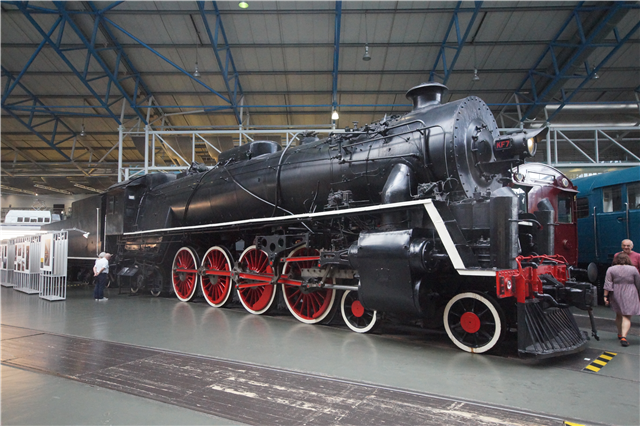
KF7 at the NRM
Photo: Dan Cardwell
| Number | Alt number | Name | Status | Pool | Depot | Note |
|---|---|---|---|---|---|---|
| 30075 | 62-669,669 | O | PR | Yugoslavian class 62 0-6-0T | ||
| 30076 | 62-521,521 | D | PR | Yugoslavian class 62 0-6-0T | ||
| 3442 | La Meuse | D | PR | Belgian La Meuse 0-6-0T | ||
| 4674 | KF7,7,607 | D | PR | Chinese KF1 4-8-4 | ||
| 64 305 | 064 305-6 | P | Returned to Germany from UK 20/3/23 | |||
| 64 305 | P | PR | German 2-6-2T Class 64 |
Danish Imported Steam
Steam loco
Danish Steam Locomotives
The first railways in Denmark were built and operated by private companies. On 1 October 1885, the companies of Jutland/Funen and Zealand were merged into one national railway company, De danske Statsbaner (the Danish State Railways), with the merger being finalised on 1 April 1893.
Several historic steam locomotives survived, and a few have made their way over to the UK.
| Length | Varies |
| Width | Varies |
| Height | Varies |
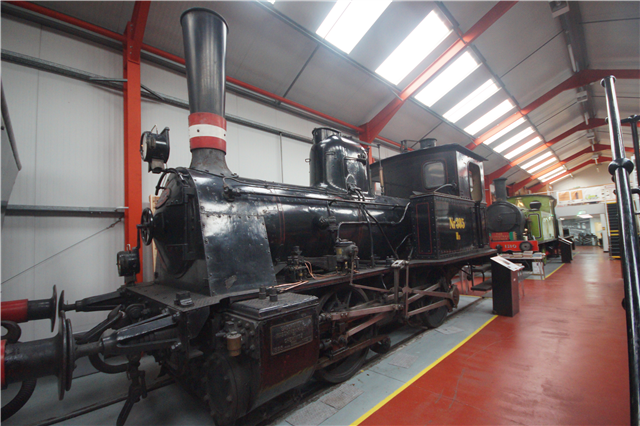
Photo: Dan Cardwell
| Number | Alt number | Name | Status | Pool | Depot | Note |
|---|---|---|---|---|---|---|
| 385 | D | PR | Danish Chemnitz 0-4-0WT | |||
| 656 | Tinkerbell | P | PR | Danish 0-6-0T Class F | ||
| 996 | 415 | S | PR | DSB E Class 4-6-2 |
Norwegian Imported Steam
Steam loco
Norwegian Steam Locomotives
The Norwegian State Railways was a state-owned railway company that operated most of the railway network in Norway and was created in 1883 to oversee the construction and operation of all state-owned railways in Norway.
On 1 December 1996, it was demerged to create the infrastructure operator Norwegian National Rail Administration, the train operator Norwegian State Railways and the Norwegian Railway Inspectorate. The name was taken by the train operator, although the infrastructure operator remained a government agency and is the legal successor.
| Length | Varies |
| Width | Varies |
| Height | Varies |
| Number | Alt number | Name | Status | Pool | Depot | Note |
|---|---|---|---|---|---|---|
| 1163 | 376,19 | Norwegian | P | PR | NSB Class 21c 2-6-0 | |
| 1164 | King Haakon,7,377 | King Haakon VII | O | PR | NSB Class 21c 2-6-0 | |
| 5865 | 4216,52 5865 | Peer Gynt | D | PR | DB/NSR Class 52 2-10-0 |
Polish Imported Steam
Steam loco
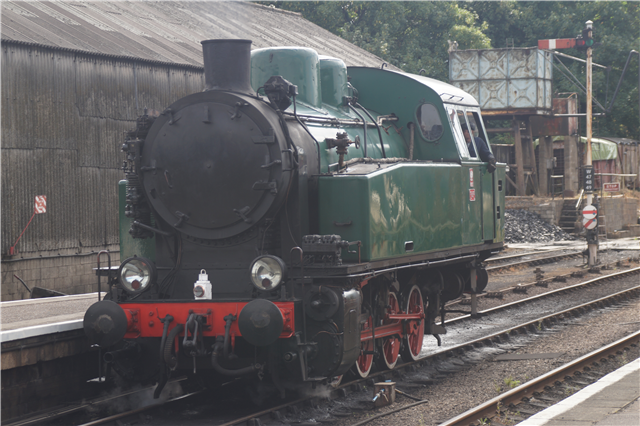
Photo: Dan Cardwell
| Number | Alt number | Name | Status | Pool | Depot | Note |
|---|---|---|---|---|---|---|
| 2871 | TKh49-2871 | S | PR | ~ | ||
| 2944 | TKh49-2944 | P | PR | ~ | ||
| 3135 | TKh49-3135 | Spartan | S | PR | ~ | |
| 3138 | TKh49-3138 | Hutnik | S | PR | ~ | |
| 4015 | 4939,TKh49-4015 | Karel | O | PR | ~ | |
| 5374 | Vanguard,TKh49-5374 | Lord Oliver Brown | P | PR | ~ | |
| 5387 | TKh49-5387 | General Maczek | P | PR | ~ | |
| 5485 | 4939,TKp-5485 | The Meg | P | PR | ~ |
Swedish Imported Steam
Steam loco
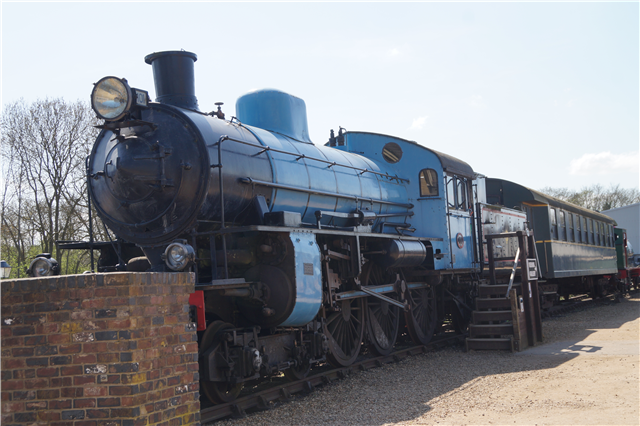
Photo: Dan Cardwell
| Number | Alt number | Name | Status | Pool | Depot | Note |
|---|---|---|---|---|---|---|
| 101 | 101A,1697 | D | PR | Swedish B Class 4-6-0 | ||
| 1178 | O | PR | Swedish S Class 2-6-2T | |||
| 1313 | R | BQ | Swedish B Class 4-6-0 | |||
| 2229 | 1928 | Alan Gladden | S | PR | Swedish S1 Class 2-6-4T |
Finnish Broad Gauge Imported Steam
Steam loco
Finnish Steam Locomotives
Finnish locomotive classes were originally based on the wheel arrangement of the locomotives: each wheel arrangement was assigned a letter of the alphabet, which was then followed by a serial number. The assignment of letters to different wheel arrangements was made when the first locomotive using it was brought into service; the letter A signified a 4-4-0 wheelbase in the Whyte notation, B signified a 0-4-2ST locomotive, C a 0-6-0 locomotive, and so on.
On 8 October 1942, the notation system was changed to two letters and a serial number. The first letter in the designation now signified the types of trains the locomotive was generally planned to haul: H (henkilöjuna) for passenger trains, P (paikallisjuna) for local (commuter) trains, T (tavarajuna) for freight trains, S (sekajuna) for mixed freight-passenger trains and V (vaihto) for shunters. The second small letter indicated the weight of the locomotive: r (raskas) = heavy, v (väliraskas) = midweight, k (kevyt) = light. They also used m = mechanical transmission and s (sähkö) = electrical transmission for multiple units.
12 steam locomotives were brought to the UK from Finland in 1990 when the Finnish strategic reserve was disbanded at the end of the Cold War.
| Gauge | 5' |
| Length | Varies |
| Width | Varies |
| Height | Varies |
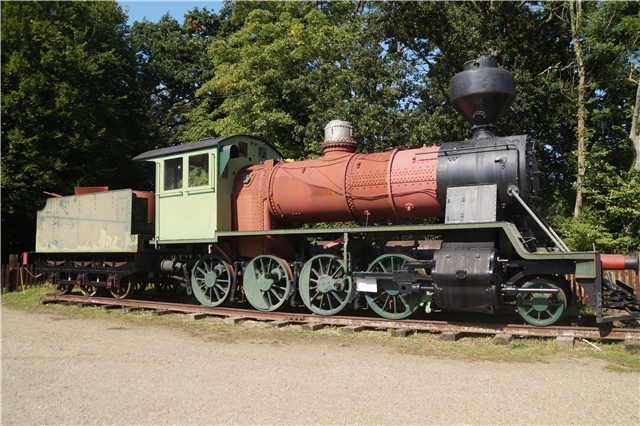
VR Class Tk3 2-8-0 No. 1144 at Bressingham
Photo: Dan Cardwell
| Number | Alt number | Name | Status | Pool | Depot | Note |
|---|---|---|---|---|---|---|
| 1060 | 172 | S | PR | Tr1 2-8-2 | ||
| 1077 | 11787 | S | PR | Tr1 2-8-2 | ||
| 141 | 1103 | U | Tk3 2-8-0 (presume scrapped) | |||
| 157 | 1008 | Dracula Castle | S | PR | Hr1 4-6-2 | |
| 397 | 1151,1819 | U | ~ | Tk3 2-8-0 | ||
| 403 | 1157 | S | PR | Tk3 2-8-0 | ||
| 531 | 1134 | S | PR | Tk3 2-8-0 | ||
| 571 | 1144 | D | PR | Tk3 2-8-0 | ||
| 792 | 373 | R | PR | Vr1 0-6-0T | ||
| 794 | 781 | U | PR | Vr1 0-6-0T | ||
| 799 | 786 | S | PR | Vr1 0-6-0T | ||
| 946 | 1016,91016 | Lady Patricia | P | PR | Hr1 4-6-2 |
Indian/Pakistan Broad Gauge Imported Steam
Steam loco
Indian/Pakistani Steam Locomotives
The British Empire built the first railways in India to further its colonial control and economic interests – including the distribution of soldiers and the transportation of cotton for export to Lancashire’s mills. The engines were broad gauge because it allowed the engineers designing the locomotives to build larger fireboxes and boilers, enabling the engines to pull longer and heavier loads.
| Gauge | 5'6" |
| Introduced | 1911 |
| Wheel Arrangement | 4-4-0 |
| Builder | Vulcan Foundry |
| Number | Alt number | Name | Status | Pool | Depot | Note |
|---|---|---|---|---|---|---|
| 2759 | 3157,3064 | D | PR | Indian NWR / Pakistan SP/S 4-4-0 |
South African Cape Gauge Imported Steam Locomotives
Steam loco
South African Steam Locomotives
This gauge 3ft, 6in is sometimes called "Cape gauge", named after the Cape Colony in what is now South Africa, which adopted it in 1873. "Cape gauge" was used in several English-speaking countries.
| Length | Varies |
| Width | Varies |
| Height | Varies |
| Gauge | 1.067m |
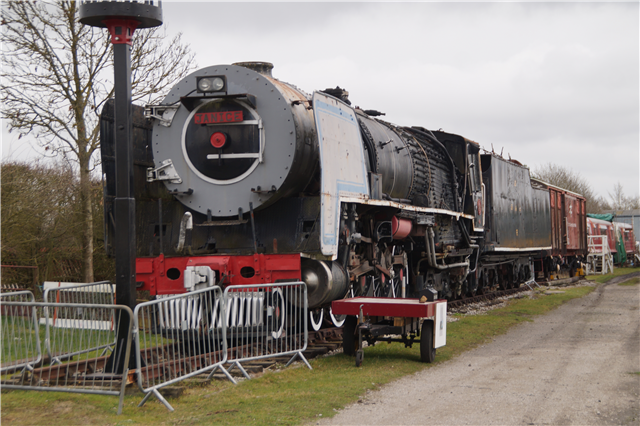
South African 3405 at Buckinghamshire Railway Centre
Photo: Dan Cardwell
| Number | Alt number | Name | Status | Pool | Depot | Note |
|---|---|---|---|---|---|---|
| 25546 | 3007 | D | PR | South African 15F 4-8-2 | ||
| 27291 | 3405 | Janice | D | PR | South African Class 25NC 4-8-4 | |
| 3891 | 196 | D | PR | South African 4-8-2T | ||
| 4150 | 390,993 | D | YM | South African Class 7A 4-8-0 | ||
| 6639 | 2352 | D | PR | South African Garratt 4-8-2+2-8-4T | ||
| 7827 | 4112 | D | PR | South African Garratt 4-8-2+2-8-4T |
Metre Gauge and Larger Imports
Steam loco
Other Metre Gauge Steam Locomotives
| Number | Alt number | Name | Status | Pool | Depot | Note |
|---|---|---|---|---|---|---|
| 4 | 5 | O | PR | Norwegian 2-6-2T | ||
| 7430 | 462,M2 | S | PR | Tasmanian 4-6-2 |
Add Link
Select Set:
Select Class: